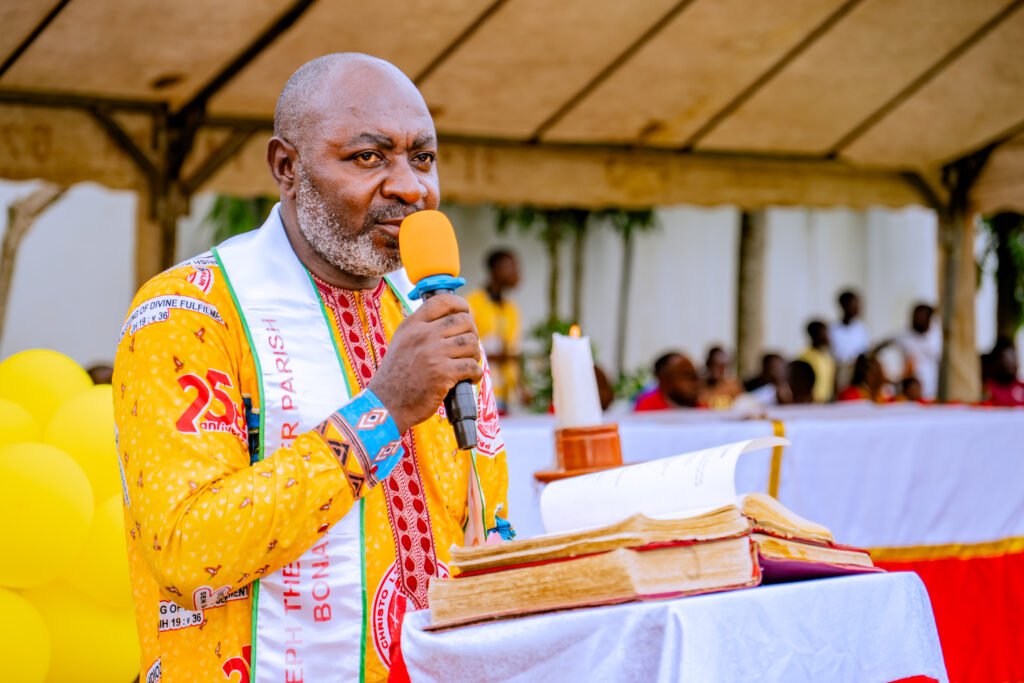
St. Joseph the Worker Parish · Bonendale-Bonaberi, Douala
The Easter Vigil
"The night that dispels all darkness — Christ, our Light!"
Alleluia! Alleluia! Alleluia!
4 April 2026 · The Holy Night of Easter · 8:00 PM
Of all the nights in the Christian year, none is more sacred, more ancient, or more luminous than the Easter Vigil. On the evening of Saturday, 4 April 2026, as darkness settled over Bonendale-Bonaberi, the faithful of St. Joseph the Worker Parish gathered not in spite of the night, but because of it — for it is in darkness that the light of the Risen Christ shines most brilliantly. Beginning at 8 o'clock in the evening, the community embarked on a journey from shadow to light, from silence to song, from death to life, in the most solemn and joyful celebration of the entire liturgical year.
The evening was animated throughout by the Parish Choir, under the able and devoted leadership of Madam Ashu Delphine and Mr. Ambe Joseph, whose music elevated every moment of the long and beautiful night. The celebration was presided over by the Parish Priest, Dr. Rev. Father Agi Livinus, assisted by Rev. Father Festus Ezeagu, with the full and active participation of all parishioners.
The Order of the Easter Vigil
- Service of Light — Blessing & Lighting of the Easter Fire
- Procession into the Church with the Easter Candle
- The Exsultet — Easter Proclamation
- Liturgy of the Word — Seven Readings & Responsorial Psalms
- Gloria — Sung for the First Time Since Lent
- Liturgy of Baptism — Blessing of Water & Baptism of New Members
- Renewal of Baptismal Promises by All the Faithful
- Confirmation
- Liturgy of the Eucharist — Mass with the Newly Baptised
- Holy Communion
- Concluding Rites & Dismissal — "Go in Peace, Alleluia, Alleluia!"
Parish Priest & Chief Celebrant
Dr. Rev. Fr. Agi Livinus
Assistant Parish Priest
Rev. Fr. Festus Ezeagu
The First Movement
The Liturgy of Light — In the Darkness of Creation
The Easter Vigil at St. Joseph the Worker Parish began where all things begin — in darkness. The community gathered outside the church in total darkness, a deliberate and deeply theological act: a remembrance of the void that preceded creation, the formless darkness over which the Spirit of God hovered at the dawn of time. Standing together in the night, without light, the congregation felt something of what it means to wait — to long for the light that only God can provide.
It was in this context of profound darkness that the Easter Fire was kindled. The flames leapt upward into the night sky, drawing every eye and warming every heart. From this new fire, the Easter Candle — the Paschal Candle, symbol of the Risen Christ — was solemnly lit. As the flame was passed from candle to candle throughout the congregation, the darkness retreated, little by little, until the assembled faithful stood bathed in the warm, flickering light of hundreds of flames held in hundreds of hands. The night was no longer dark; Christ had entered it.
The Second Movement
The Procession & The Exsultet
With the Easter Candle raised high and the faithful carrying their lit candles, the procession moved from the darkness outside into the church. Three times the priest paused and chanted — "The Light of Christ" — and three times the congregation responded with one voice: "Thanks be to God." With each proclamation, the light grew, and with it, the sense of something ancient and wonderful being made present once again.
Once the procession had filled the church with light and song, the great Easter Proclamation rang out — the Exsultet, one of the oldest and most beautiful hymns in the Christian tradition. In soaring, poetic language, the Exsultet recounts the history of salvation, celebrates the night of the Exodus, and exults in the resurrection of Christ. "This is the night," the cantor proclaimed again and again, "when Christ broke the prison bars of death and rose victorious from the underworld." The words filled the church, and hearts overflowed.
"Rejoice, O earth, in shining splendour, radiant in the brightness of your King!
Christ has conquered! Glory fills you! Darkness vanishes for ever!"
— The Exsultet
The Third Movement
The Liturgy of the Word
The Liturgy of the Word at the Easter Vigil is unlike any other in the liturgical year. Seven readings from the Old Testament were proclaimed, tracing the great arc of salvation history — from the creation of the world in Genesis, through the Exodus and the crossing of the Red Sea, to the prophecies of Isaiah and Ezekiel announcing the new covenant that God would write upon the hearts of his people. Between each reading, the choir of St. Joseph the Worker Parish, led by Madam Ashu Delphine and Mr. Ambe Joseph, sang responsorial psalms that deepened the community's meditation on the Word being proclaimed.
This long, rich listening is itself a form of prayer — the Church sitting at the feet of her Lord and letting his story become her story. By the time the New Testament readings were proclaimed, the congregation had been drawn into a sweep of sacred history that stretched from the first word of creation to the empty tomb of Easter morning.
The Fourth Movement
The Gloria — Breaking the Silence of Lent
Then came a moment the congregation had been waiting forty days for. Since Ash Wednesday, the Gloria — the great hymn of praise that opens the Mass — had been silent. Through all of Lent, through Holy Thursday's stripped altar and Good Friday's bare cross, the Gloria had not been sung. Its absence had been felt, a small but real liturgical fast that made its return all the more glorious.
When the opening notes rang out and the congregation of St. Joseph the Worker Parish sang "Glory to God in the highest" for the first time since the beginning of Lent, the effect was electric. Voices that had been held in restraint for forty days were finally unleashed. The choir, led with joy by Madam Ashu Delphine and Mr. Ambe Joseph, gave everything, and the faithful sang with them. It was a moment of pure liturgical joy — a foretaste of the resurrection morning that the Church was about to celebrate.
The Fifth Movement
Baptism, Renewal of Baptismal Promises & Confirmation
The Easter Vigil is, above all, the night of baptism — the night when the Church welcomes new members into the family of God. Following the homily, the community gathered around the baptismal font as Dr. Rev. Father Agi Livinus blessed the water with a prayer rich in imagery: the waters of creation, the waters of the flood, the waters of the Red Sea, the waters of the Jordan — all pointing to the water of baptism through which the faithful pass from death to new life in Christ.
The newly baptised — welcomed into the full communion of the Catholic Church on this most holy night — received the sacrament with visible emotion, as the congregation watched and prayed. Each baptism is a resurrection in miniature: a soul submerged in the death of Christ and raised to walk in the newness of his risen life.
The entire congregation then renewed their own baptismal promises, renouncing sin and professing faith in the Father, the Son, and the Holy Spirit — their lit candles held high as a sign of the light they had received and were called to carry into the world. Confirmation followed, as the Holy Spirit was called down upon those who were being fully initiated into the life of the Church, sealing them with the gift of strength, wisdom, and courage for the Christian life ahead.
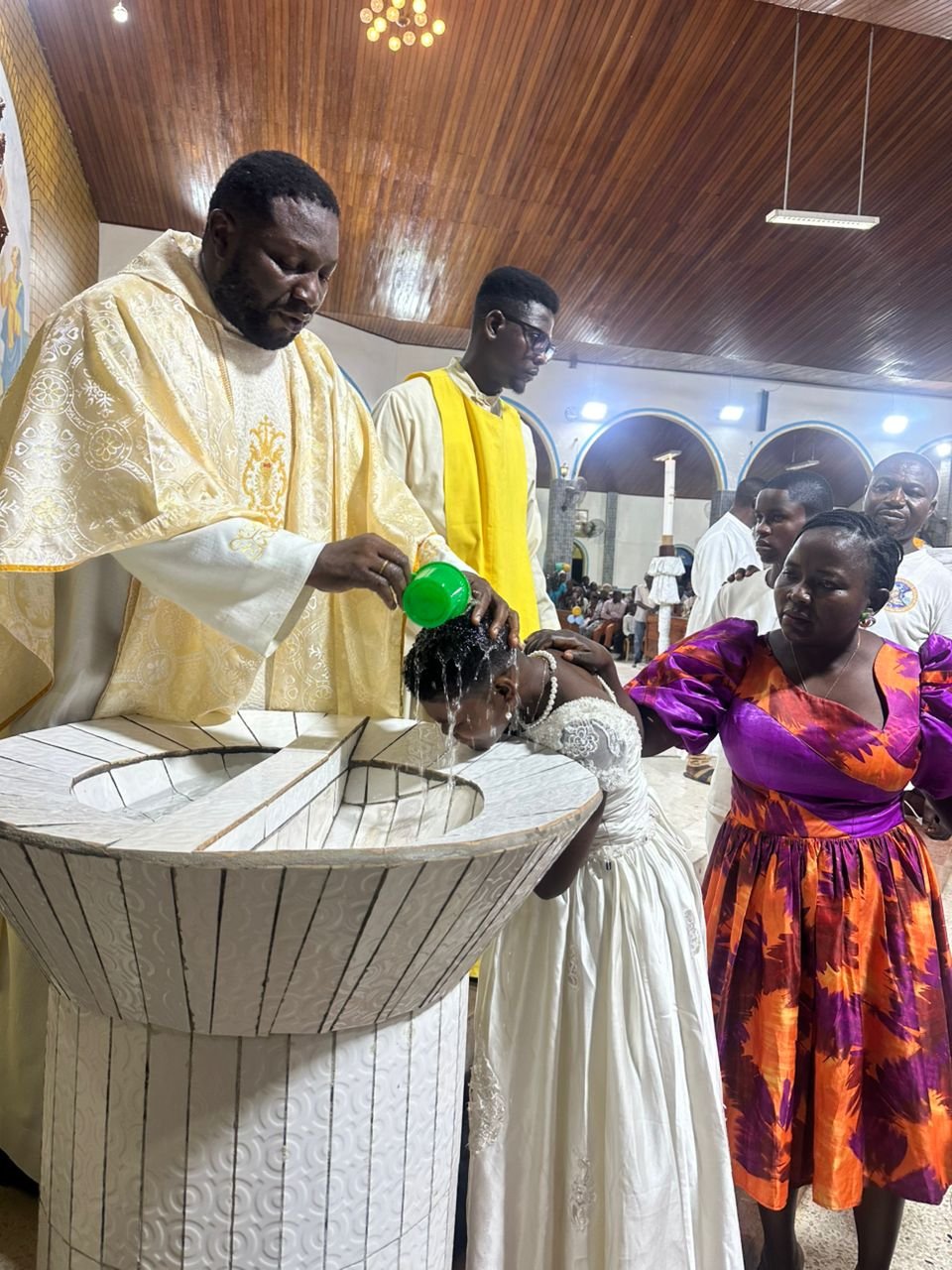
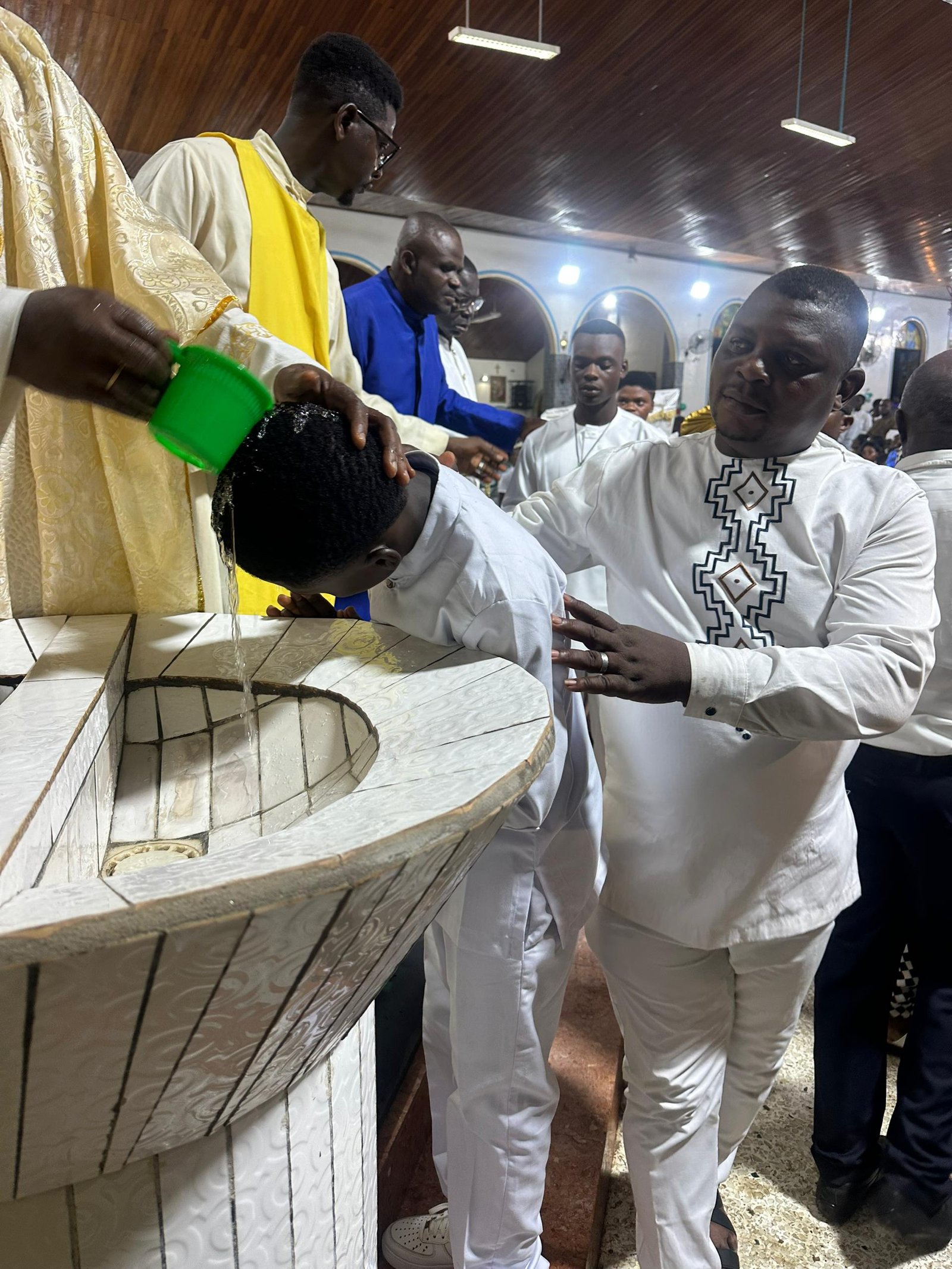
The Sacrament of Baptism — new members welcomed into the family of God
The Sixth Movement
The Liturgy of the Eucharist & Holy Communion
The Easter Vigil reached its summit in the celebration of the Eucharist — the great thanksgiving, the sacrifice of the Mass, the table at which the Risen Lord feeds his people with his own Body and Blood. For the newly baptised and confirmed, this was their very first Communion — the completion of Christian initiation — and the joy on their faces as they received the Eucharist for the first time mingled with the quiet, deep joy of the faithful who had received it countless times before and found in it, again and again, the inexhaustible gift of Christ's presence.
The offertory was made with generosity of spirit, the congregation bringing their gifts to the altar in the same movement of love and self-offering that marked the entire evening. The Eucharistic Prayer rose into the night air of Bonendale-Bonaberi as a great act of praise and thanksgiving — for creation, for redemption, for the resurrection of Christ, for the new members of the community, and for the gift of being gathered together as one body around the one table of the Lord.
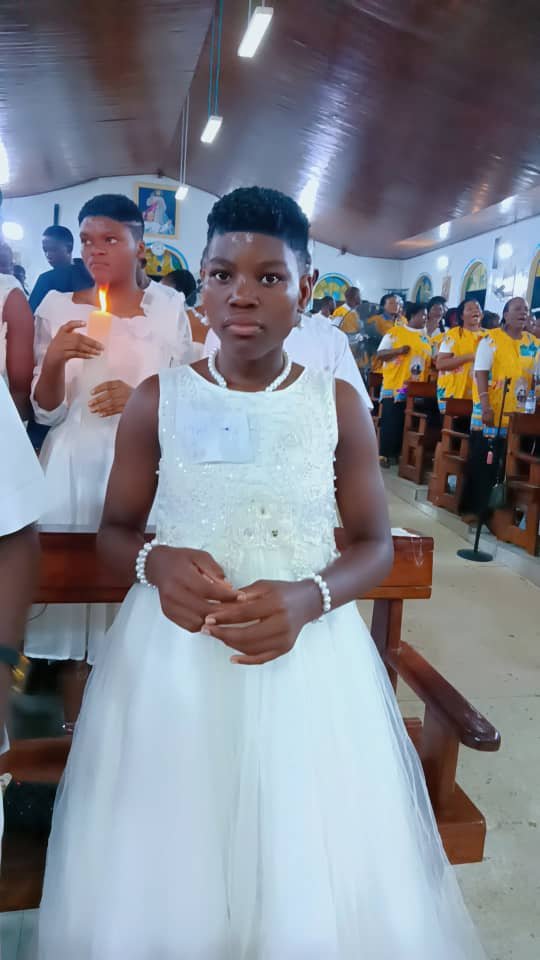
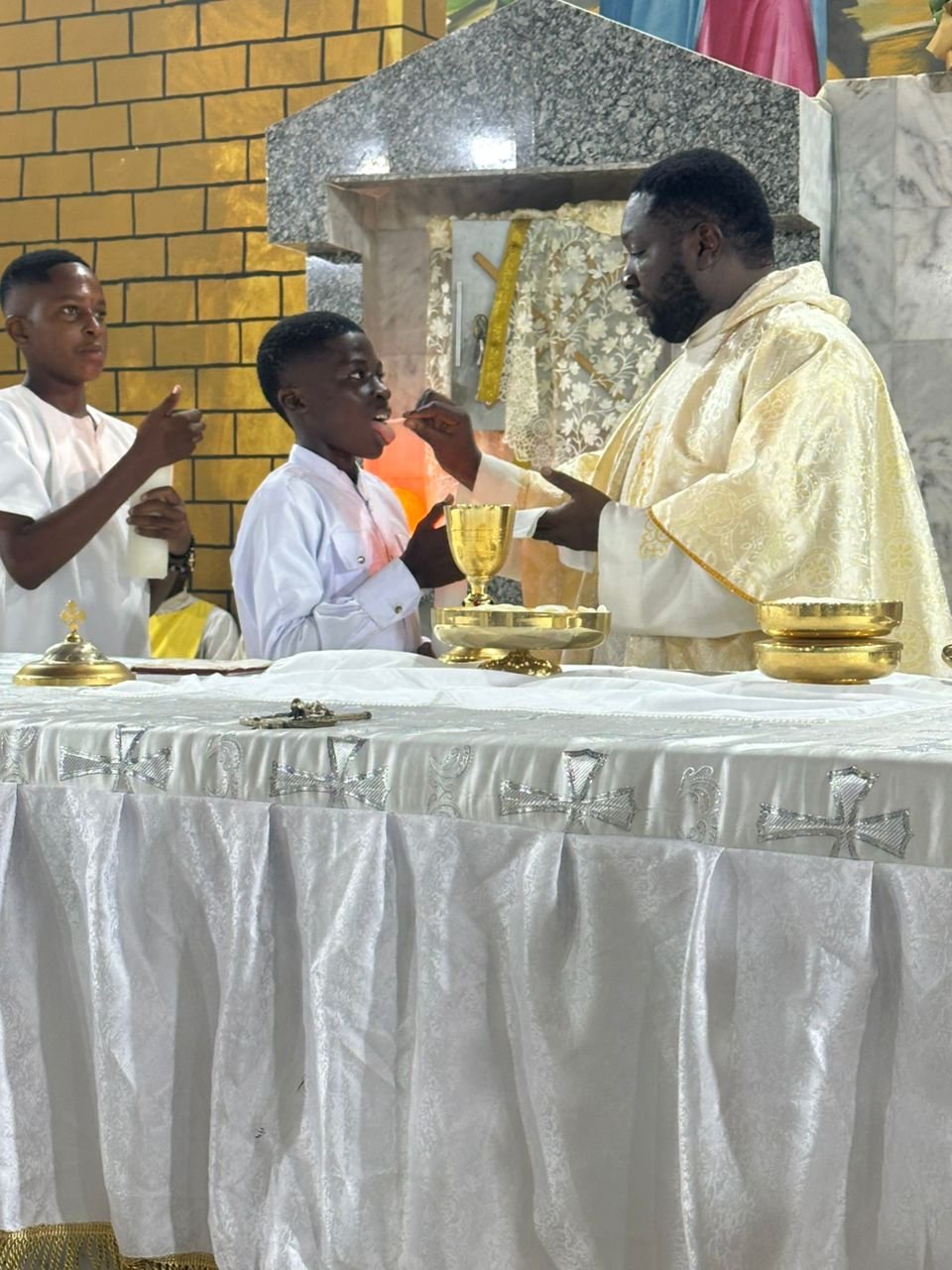
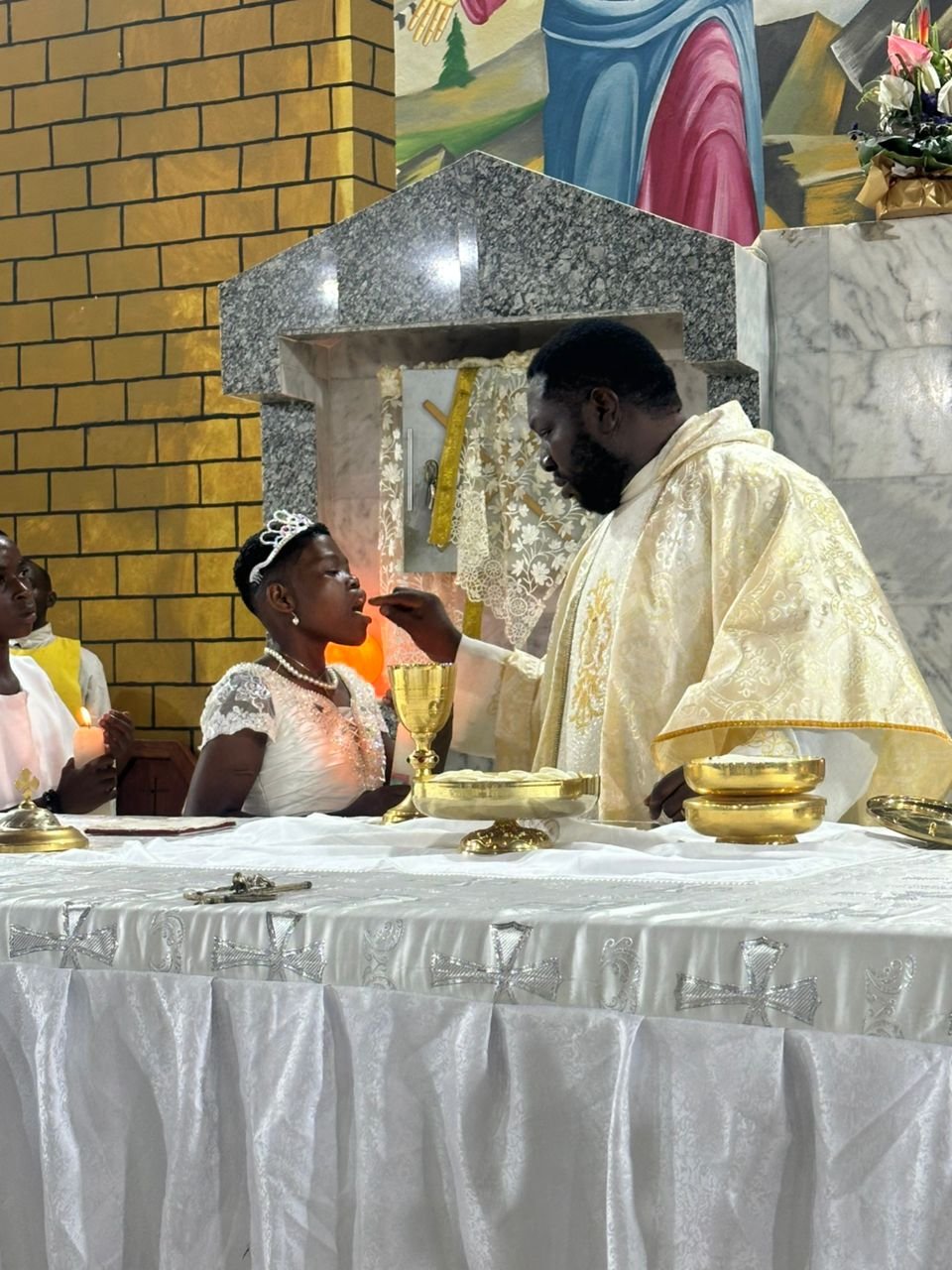
The faithful and the newly baptised receive Holy Communion together
The Seventh Movement
The Concluding Rites — "Go in Peace, Alleluia, Alleluia!"
After Holy Communion and the concluding prayers, the moment of dismissal arrived — and it was unlike any other dismissal of the year. The priest chanted the words that no one had heard for forty days: "Go in peace, Alleluia, Alleluia!" And the congregation, filled with the Eucharist and overflowing with the joy of the Risen Lord, responded with voices that had been waiting all through Lent for this very word: "Thanks be to God, Alleluia, Alleluia!"
The celebration that had begun in darkness — in the silence of a night that recalled the void before creation — ended in light, in song, and in the ancient, inexhaustible shout of Easter joy: Alleluia. The faithful of St. Joseph the Worker Parish went out from the church that night as people transformed — renewed in their baptismal dignity, nourished by the Eucharist, confirmed in the Spirit, and sent into the world to be, in the words of the Exsultet, bearers of the light that no darkness can overcome.
The Easter Vigil of 2026 at St. Joseph the Worker Parish, Bonendale-Bonaberi, Douala, was a night that the community will long remember — a night of fire and water, of darkness and light, of ancient words and new beginnings. Under the faithful and joyful leadership of Dr. Rev. Father Agi Livinus and Rev. Father Festus Ezeagu, and sustained by the music of the Parish Choir under Madam Ashu Delphine and Mr. Ambe Joseph, the entire Parish entered once again into the mystery at the heart of their faith: that Christ is risen, that death has no final word, and that those who belong to him are destined not for darkness, but for light without end.
"I am the resurrection and the life.
Whoever believes in me, though he die, yet shall he live,
and everyone who lives and believes in me shall never die."
John 11:25–26